1A. Level of Consciousness
- (0) Alert, keenly responsive
- (1) Not alert; but arousable by minor stimulation to obey, answer or respond
- (2) Not alert; requires repeated stimulation to attend, or is obtunded and requires strong or painful stimulation to make movements (not stereotyped)
- (3) Responds only with reflex motor or autonomic effects, or totally unresponsive, flaccid, and areflexic
Note: If full evaluation is prevented by ET tube, language barrier, or orotracheal trauma, the investigator must choose a response
1B. Level of Consciousness – Ask the patient for the month and their age.
- (0) Answers both questions correctly
- (1) Answers one question correctly
- (2) Answers neither question correctly
1C. Level of Consciousness Commands – Ask the patient to open and close their eyes, and then grip and release the non-paretic hand. Substitute another one-step command if the hands cannot be used. Only the first attempt is scored.
- (0) Performs both tasks performed correctly
- (1) Performs one task correctly
- (2) Performs neither task correctly
2. Best Gaze – Only test horizontal eye movement
- (0) Normal
- (1) Partial gaze palsy (e.g. isolated peripheral nerve paresis CN III, IV or VI); gaze is abnormal in one or both eyes, but forced deviation or total gaze paresis is not present
- (2) Forced deviation, or total gaze paresis is not overcome by the oculocephalic maneuver
3. Visual Fields
- (0) No visual loss
- (1) Partial hemianopia (Quadrantanopia)
- (2) Complete hemianopia
- (3) Bilateral hemianopia (blind including cortical blindness)
4. Facial Palsy – Ask the patient to show teeth or raise eyebrows and close eyes
- (0) Normal symmetrical movements
- (1) Minor paralysis (flattening of nasolabial fold, asymmetry on smiling)
- (2) Partial paralysis (total or near-total paralysis of lower face)
- (3) Complete paralysis of one or both sides (absence of facial movement in the upper and lower face)
5. Motor Arm (Each arm gets a score)- extend the arms (palms down) 90 degrees (if sitting) or 45 degrees (if supine). Drift is scored if the arm falls before 10 seconds.
- (0) No drift; limb holds for full 10 seconds
- (1) Drift; limb holds 90 degrees but drifs down before full 10 seconds; does not hit bed or other support
- (2) Some effort against gravity; limb cannot get to or maintain (if cued) 90 degrees, drifts down to bed, but has some effort against gravity
- (3) No effort against gravity; limb falls
- (4) No movement
- UN – Untestable in amputation or joint fusion
6. Motor Leg (Each leg gets a score) – hold the leg at 30 degrees. Drift is assessed if the leg falls before 5 seconds
- (0) No drift
- (1) Drift; leg falls by the end of the 5 second period but does not hit the bed
- (2) Some effort against gravity; leg falls to bed by 5 seconds but has some effort against gravity
- (3) No effort against gravity; leg falls to bed immediately
- (4) No movement
- UN – Untestable in amputation or joint fusion
7. Limb Ataxia – Test with eyes open. Finger to nose and heel-shin tests are performed on both sides; Ataxia is absent in the patient who cannot understand or is paralyzed
- (0) Absent
- (1) Present in one limb
- (2) Present in both limbs
- UN – Untestable in amputation or joint fusion
8. Sensory – sensation or grimace to pinprick, or withdrawal from noxious stimulus in the obtunded or aphasic patient. A score of 2 should only be given when a severe or total loss of sensation can be clearly demonstrated.
- (0) No sensory loss
- (1) Mild to moderate sensory loss; patient feels pinprick is dull or less sharp on the affected side; or there is a loss of superficial pain with pinprick, but patient is aware of being touched
- (2) Severe or total sensory loss; patient is not aware of being touched in the face, arm and leg
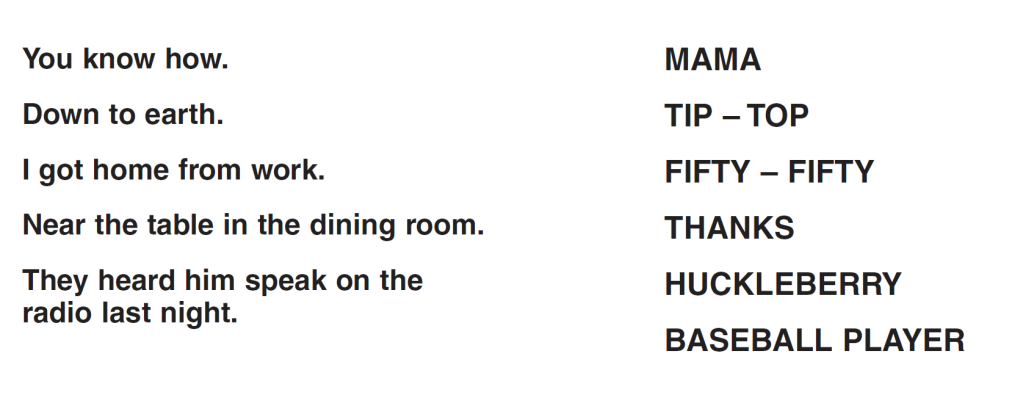
9. Best language – Ask the patient to describe what is happening in the picture, to name the items on the attached naming sheet, and to read from the attached list of sentences. The patient in a coma will automatically receive a score of 3.
- (0) No aphasia
- (1) Mild to moderate aphasia
- (2) Severe aphasia
- (3) Mute, global aphasia
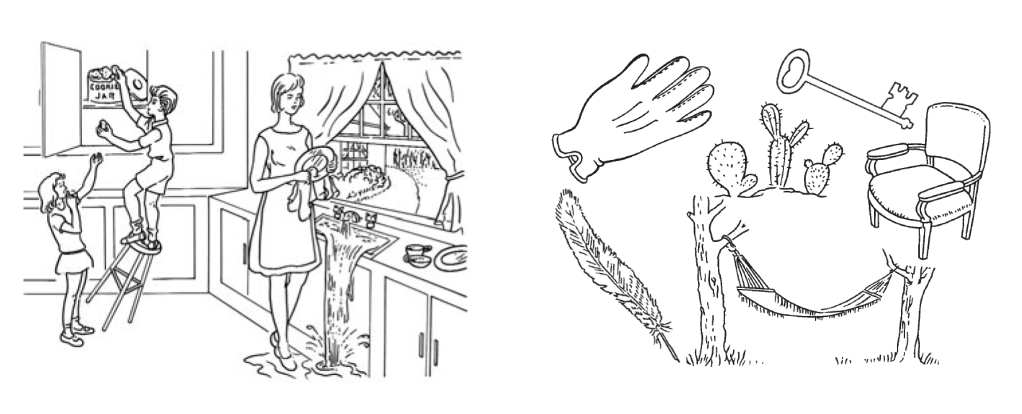
10. Dysarthria – Ask the patient to read or repeat words from the attached list
- (0) Normal
- (1) Mild-to-moderate dysarthria; patient slurs at least some words, and at worst, can be understood with some difficulty
- (2) Severe dysarthria; patient’s speech is so slurred as to be unintelligible in the absence of or out of proportion to any dysphasia, or is mute
- UN – intubated or other physical barrier
11. Extinction and inattention (Neglect)
- (0) No abnormality
- (1) Visual, tactile, auditory, spatial or personal inattention, or extinction to bilateral simultaneous stimulation in one of the sensory modalities
- (2) Profound hemi-inattention or exteinction to more than one modality; does not recognize own hand or orients to only one side of space
PEARLS:
- Patients with a score <4 are likely to have a good outcome.
- Every 1 point increase in the NIHSS decreases the likelihood of an excellent outcome by 24% at 7 days and 17% at 3 months
- NINDS Trial: NIHSS >20 was associated with a 17% rate of ICH with tPA v. a 3% rate of ICH in patients with a score of <10
 Emergency Medicine is Hard
Leave a comment